
Top 6 ZoomInfo Competitors & Alternatives for 2026
Note: This article may contain affiliate links. If you purchase through them, we may earn a commission at no extra cost to you. Read our full disclaimer here.
Everyone knows ZoomInfo is the giant in the room. They have the biggest brand, the flashiest features, and the most aggressive sales team.
But for many growth-focused B2B companies, the price tag is a dealbreaker.
In 2026, ZoomInfo contracts typically start between $15,000 and $25,000 per year, often with strict lock-ins and upfront payments. For a mid-market enterprise, that might be a rounding error. For a lean startup or an agency, it is a massive line item.
The frustration usually isn't just the price. It is the data decay. There is nothing worse than paying premium prices for a "Direct Dial" that connects you to a former employee who left three years ago.
If you are looking to escape the "ZoomInfo Tax," you have options. We reviewed the top 6 competitors based on Data Accuracy, Pricing, and Usability.
1. Apollo.io (The Value King)

If ZoomInfo is the enterprise choice, Apollo is the startup darling. They have aggressively captured the market by offering a "good enough" database combined with sales engagement features.
Best For: Seed to Series B startups who need an all-in-one tool.
The Pros:
Massive Database: They claim over 275 million contacts.
Built-in Sequencing: You don't just get the data; you can email them directly from the platform.
Free Tier: Their "Freemium" model is generous, allowing you to test the data before committing.
The Cons: Data accuracy can be volatile. Because much of their data is crowdsourced from users connecting their inboxes, it can sometimes be outdated.
Pricing: Starts at roughly $59/user/month (billed annually), which is a fraction of ZoomInfo's cost.
2. Bookyourdata (The Transactional Extraction Model)
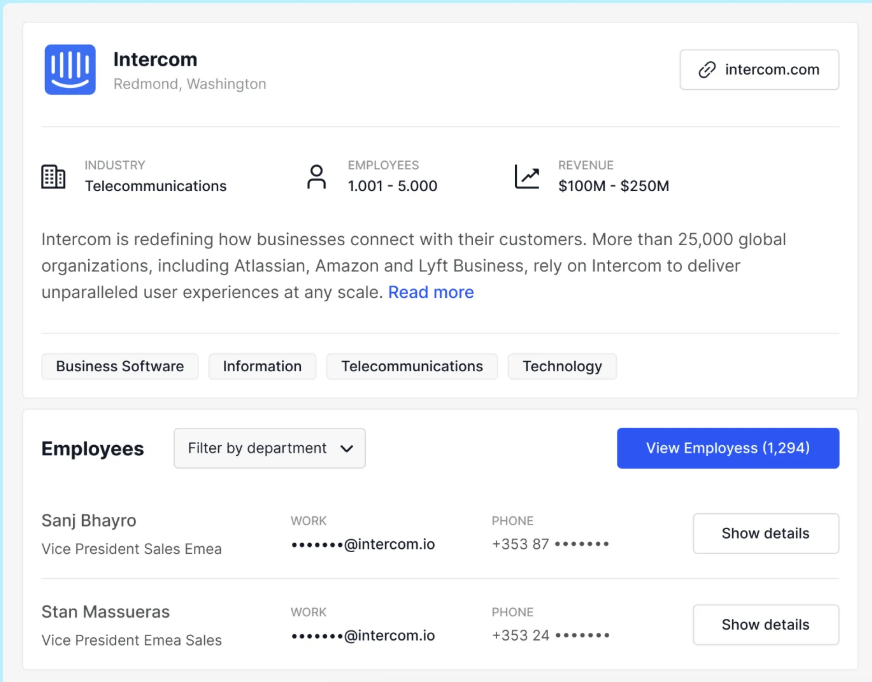
BookYourData helps you create Targeted Email Lists for Marketing and Download them in bulk just in seconds.
BookYourData operates as a strictly transactional B2B data provider, engineered for teams that refuse to lock up $15,000+ in annual ZoomInfo contracts just to run targeted outbound. Instead of bloated software subscriptions, the platform functions on a pay-as-you-go extraction model, allowing outbound teams to pull verified lists precisely when they need them.
Users can query millions of global B2B contacts, filtering by strict firmographics and technographics, and export the data immediately. The unit economics are the primary advantage: you pay strictly for the data you extract, rather than the privilege of accessing the database.
Best For: Lean outbound pods, fractional sales teams, and startups executing highly targeted, sprint-based campaigns rather than mass-volume blasting.
The Pros:
Zero-Contract Architecture: You purchase credit packs on demand, completely eliminating the friction of annual procurement.
Point-of-Export Verification: Email addresses are verified in real-time at the exact moment of download, protecting your secondary sending domains from hard bounces.
The Cons:
No Built-In Sequencing: This is strictly a data extraction environment. To execute campaigns, you must bridge this data into a dedicated outbound architecture.
Pricing: Starts at $99 for a block of 250 verified contacts.
3. Lusha (The Mobile Number Specialist)
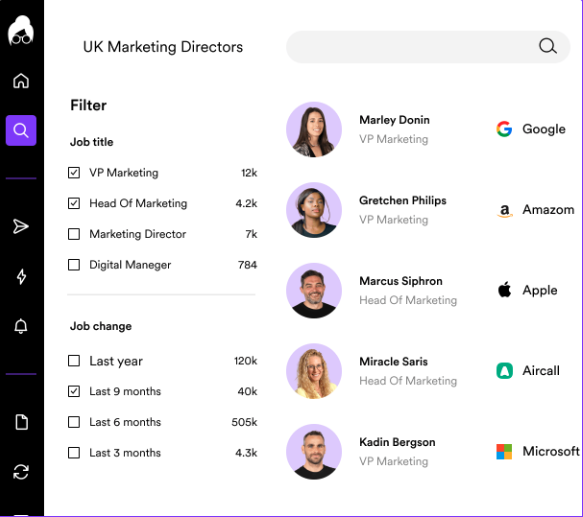
Lusha let’s your combine your CRM data, Lusha-enriched data, and real-world signals in one workspace.
Lusha rose to fame because of its browser extension. While other tools struggled to find personal mobile numbers, Lusha consistently delivered.
Best For: High-volume cold calling teams.
The Pros:
Mobile Coverage: They excel at finding direct mobile numbers for decision-makers, bypassing the gatekeeper.
Ease of Use: Their Chrome extension overlays perfectly on LinkedIn, making prospecting feel seamless.
The Cons: Their database size is smaller than ZoomInfo's. If you target niche industries or lower-level managers, you might find "No Data Found" more often.
Pricing: Starts around $29/user/month, but credits burn fast if you are a heavy user.
4. Cognism (The Global/Compliance Choice)
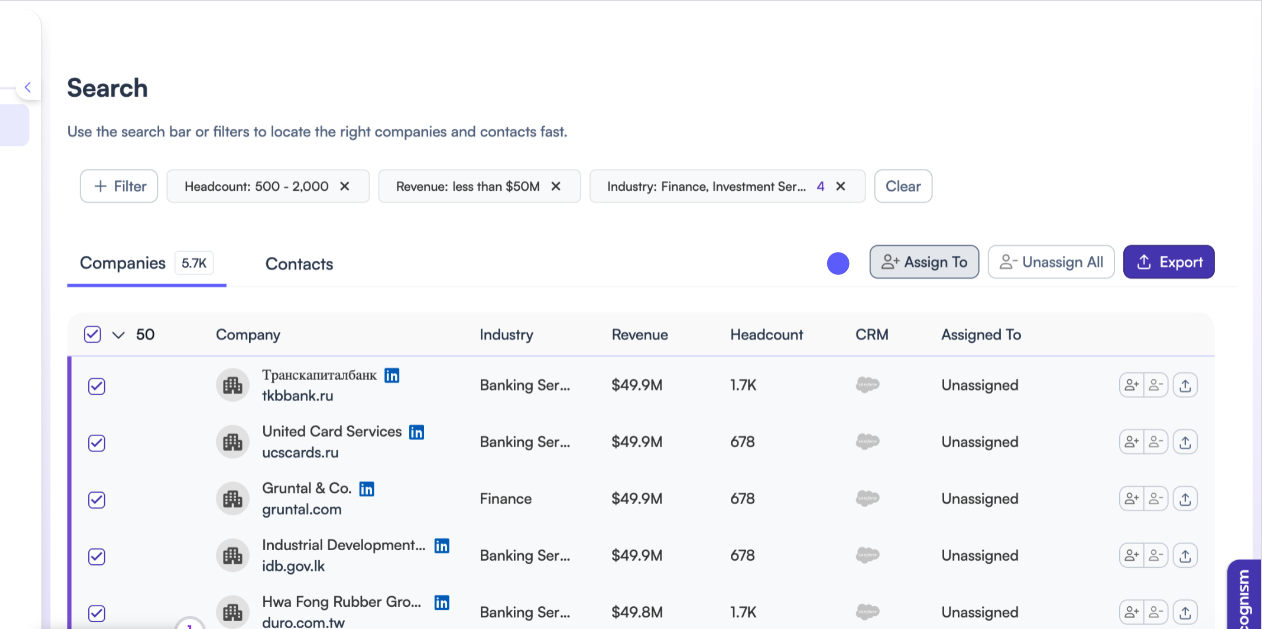
Cognism gives your sales teams quality data and insights they can trust.
If you are selling into the UK or Europe, ZoomInfo often struggles. Cognism is the leader in GDPR-compliant data.
Best For: Companies targeting the UK, Europe, or Global markets.
The Pros:
Phone Verification: Their "Diamond" data set is manually verified by a human team, meaning the phone actually rings.
Safety: They take GDPR compliance seriously, which is critical if you want to avoid fines in the EU.
The Cons: They are positioning themselves as a premium tool. Their pricing is creeping closer to ZoomInfo levels, so do not expect a bargain bin rate.
Pricing: Custom quotes, typically in the mid-market range ($5k - $10k+).
5. UpLead (The Accuracy Guarantee)
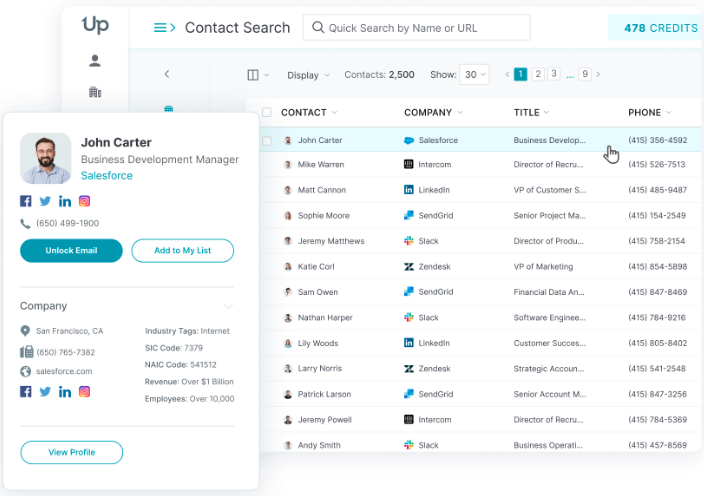
Uplead is a platform that promises Real-time verified B2B emails, mobile numbers and intent data
UpLead positions itself as the "Anti-ZoomInfo" by focusing purely on data hygiene. Their core promise is quality over quantity.
Best For: Teams that prioritize low bounce rates.
The Pros:
Real-Time Verification: When you export a lead, they verify the email in real-time. If it bounces, they do not charge you a credit.
95% Guarantee: They claim a 95% accuracy rate, which is bold in this industry.
The Cons: Smaller database. You won't find every single person in existence, but the ones you find will be real.
Pricing: Starts around $99/month.
6. Seamless.AI (The Real-Time Search Engine)
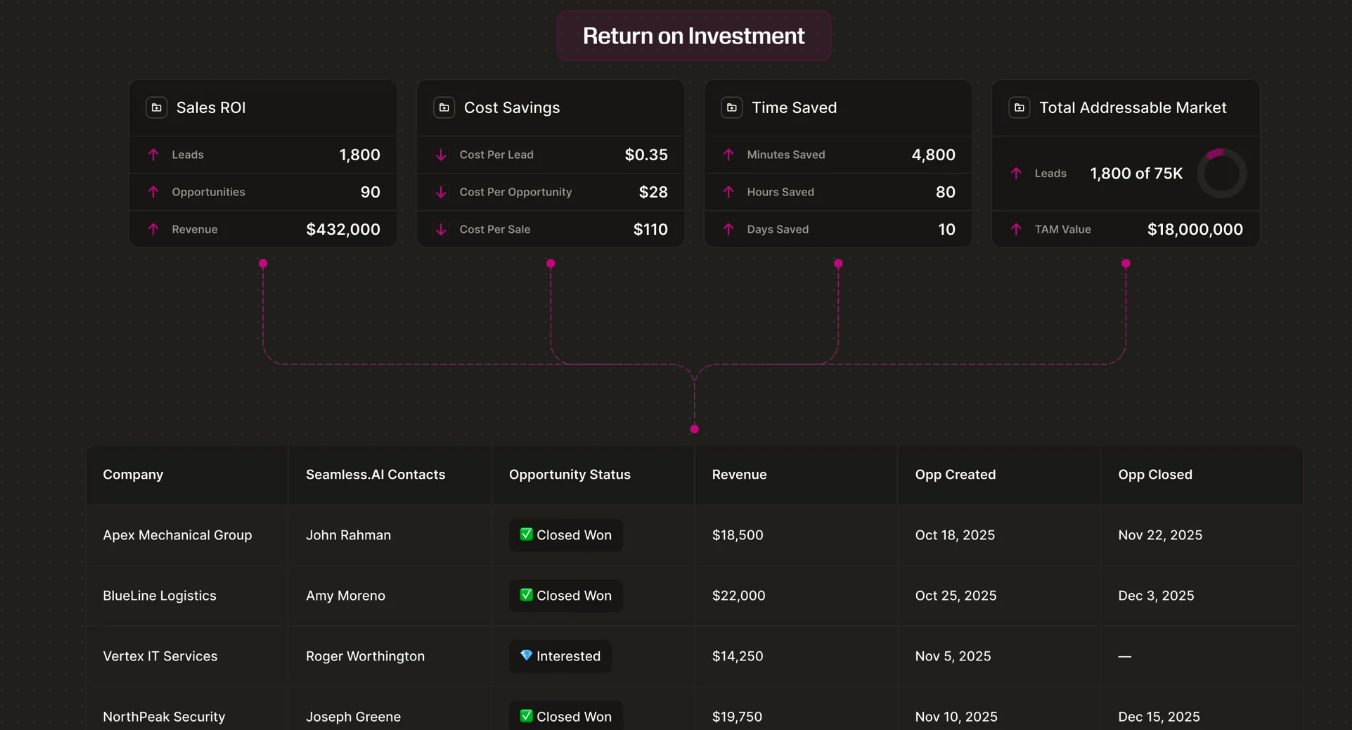
While I’m personally not a massive fan of the dark interface, Seamless can definitely deliver on their promise.
Seamless operates differently. Instead of just querying a static database, their AI attempts to find contact info in real-time across the web.
Best For: Lists building in niche markets.
The Pros:
Freshness: Because it searches the web live, it can sometimes find contacts that haven't made it into static databases yet.
The Cons: The UI can be clunky, and the "AI" sometimes hallucinates contact info that doesn't exist.
Pricing: varies, but generally competitive with Apollo.
The Hidden Cost of Buying Data Software
Here is the secret SaaS companies don't tell you. The price of the subscription is just the entry fee.
1. The "Seat Tax" Most of these platforms charge per user. If you have a team of 5 SDRs, a $100/month tool suddenly becomes a $6,000/year expense. And that is just for access.
2. The "Operations Tax" Buying the data is step one. Who is going to clean it? Who is going to verify it? Who is going to import it into your CRM?
If you simply export 1,000 leads from Apollo and dump them into your CRM without cleaning them, you will pollute your pipeline.
(We recommend using a CRM like Pipedrive that handles imports easily, but you still need a human to manage the hygiene).
3. The Decay Rate B2B data decays at roughly 2-3% per month. People change jobs. Companies go bankrupt. If you sign a 12-month contract for a static database, by month 10, nearly 30% of your data is worthless.
The Better Alternative: Done-For-You Data
Instead of renting a tool, paying for seats, and managing the cleaning yourself, there is a third option: Service-Led Data.
At Ground Leads, we flip the model. We don't sell you a login. We sell you the result.
We subscribe to multiple premium data providers (including the ones listed above) so you don't have to. We cross-reference ZoomInfo against Apollo, then verify it against our proprietary database.
The Verification Step We don't just give you a CSV. We manually verify the list. If an email bounces, we replace it for free. You pay for valid leads, not "credits."
(To see exactly how we verify data compared to these tools, read our Email List Providers guide).
Comparison: ZoomInfo vs. Ground Leads
| Provider | Est. Starting Price | Data Accuracy | Best For... |
|---|---|---|---|
| ZoomInfo | $15k - $25k / yr | High | Enterprise Sales Teams |
| Apollo.io | $60 / mo / user | Medium | DIY Startups |
| Lusha | $29 / mo / user | High (Mobile) | Cold Callers |
| Ground Leads | Included in Service | 100% Verified | Companies who want results |
Conclusion
Buying software is easy. Turning that data into revenue is hard.
If you have a large sales ops team to manage these tools, ZoomInfo (or a cheaper alternative like Apollo) is a great asset.
But if you are a founder or sales leader who just wants qualified meetings on the calendar without the headache of managing database subscriptions, you don't need a tool. You need a partner.
Stop paying for data credits that bounce. Book a strategy call with Ground Leads, and we’ll build your target list for free as part of your campaign.
Frequently Asked Questions (FAQ)
1. Is ZoomInfo worth the money? It depends on your scale. If you have 5+ sales reps and need advanced features like "Intent Data" (seeing who is searching for your services), ZoomInfo is powerful. For smaller teams just looking for emails and phone numbers, it is often overkill.
2. Does Apollo have better data than ZoomInfo? Generally, no. ZoomInfo invests millions in verifying their data. However, Apollo is often "good enough" for most campaigns and costs 1/10th of the price.
3. How do I get B2B data without a subscription? Work with a lead generation agency. Agencies like Ground Leads absorb the cost of the data tools. We buy the data in bulk, clean it, and use it to run your campaigns, so you never have to sign a software contract.
Disclaimer: This article contains affiliate links for Pipedrive. We may receive a commission if you sign up through our links, at no cost to you. Read full disclaimer.



Inbound got you to $1-3M ARR. It won't get you to $10M. Here's the brutal playbook for hunting enterprise deals without hiring SDRs or burning six months.